For many small-scale farmers and home gardeners, one of the biggest challenges is maximizing production from limited space. Whether working with a backyard garden, an urban plot, or a farm of less than one acre, the question remains the same: how can more food, income, and resilience be generated from the same piece of land?
One increasingly popular answer lies in a simple but powerful principle, growing in layers.
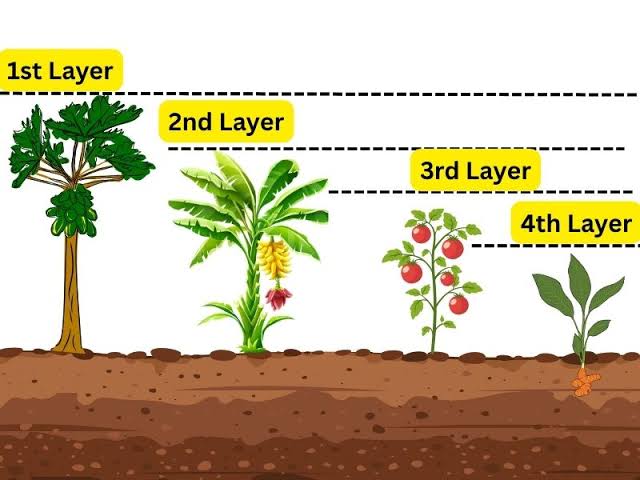
Small gardens and farms can often achieve higher productivity, greater crop diversity, and longer harvesting cycles by incorporating at least three complementary vegetation layers, provided the crops are selected and managed appropriately. This approach, commonly used in agroforestry and regenerative agriculture, mimics natural ecosystems where plants occupy different heights and perform different functions.
Understanding the Three-Layer System
Rather than growing crops at a single height, a layered garden utilizes vertical space by combining plants that thrive at different levels.
The Upper Layer
The upper layer consists of taller trees or crops that provide shade, fruit, timber, or other long-term benefits. Examples include avocado, mango, moringa, macadamia, and citrus trees.
These plants form the backbone of the system and often provide some of the highest-value harvests over time.
The Middle Layer
The middle layer includes medium-height crops and shrubs such as papaya, pigeon peas, coffee, bananas, cassava, and certain medicinal plants.
This layer helps maximize the use of sunlight while creating additional income and food sources between the taller trees and ground crops.
The Ground Layer
The ground layer consists of vegetables, herbs, legumes, and cover crops such as spinach, kale, onions, beans, sweet potatoes, coriander, and indigenous vegetables.
These crops provide frequent harvests, quick returns, and continuous ground cover that protects soil health.
Why Layering Improves Productivity
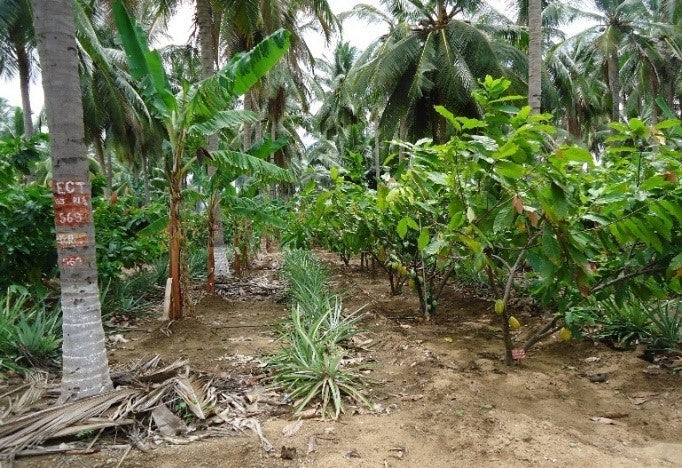
One of the greatest advantages of layered growing systems is their ability to make better use of available space.
In traditional farming systems, much of the vertical growing space remains unused. A layered system captures sunlight at multiple levels, allowing more plants to grow productively within the same area.
Instead of relying on a single crop for income or food production, farmers can harvest from several crops simultaneously. This creates multiple revenue streams and improves overall land productivity.
For smallholders working on less than one acre, this can significantly increase the amount of food and value produced per square metre.
Extending Harvest Cycles Throughout the Year
Another major benefit of layered systems is the ability to stagger production.
Different crops mature at different rates. Leafy vegetables may be harvested within weeks, bananas within months, and fruit trees over several years. This creates a continuous cycle of production rather than a single harvest season.
As one crop finishes producing, another may be reaching maturity. This helps improve household food security while generating more consistent income throughout the year.
For families that depend on farming as a primary livelihood, reducing periods without harvests can make a significant difference.
Improving Biodiversity and Resilience
Diversity is one of nature’s greatest strengths.
A farm with multiple crop types is often more resilient than a monoculture system. When pests, diseases, droughts, or market fluctuations affect one crop, other crops may continue to perform well.
Layered systems also encourage beneficial insects, improve pollination, support soil microorganisms, and create healthier ecosystems overall.
The result is a farm that is better equipped to withstand environmental and economic challenges.
Enhancing Soil Health
Healthy soil is the foundation of productive agriculture.
A layered system helps protect soil by reducing direct exposure to sun, wind, and heavy rainfall. Ground-cover plants reduce erosion, while leaf litter from trees contributes organic matter and nutrients.
Many farmers also integrate nitrogen-fixing plants such as pigeon peas, beans, and certain tree species to naturally improve soil fertility.
Over time, this can reduce dependence on external inputs while improving long-term productivity.
Choosing the Right Crop Combinations
While layered systems offer many benefits, success depends on careful planning.
Not all crops work well together. Poorly chosen combinations can create excessive competition for sunlight, water, and nutrients. Farmers should consider local climate conditions, rainfall patterns, soil type, and market demand when designing their systems.
For example, a productive small-scale tropical garden might include:
- Upper Layer: Avocado and moringa trees
- Middle Layer: Bananas and pigeon peas
- Ground Layer: Spinach, beans, sweet potatoes, and indigenous vegetables
The goal is to ensure that each layer complements the others rather than competing against them.
The Future of Small-Space Farming
As land becomes increasingly scarce and the demand for sustainable food production grows, farmers must find innovative ways to produce more with less.
Three-layer growing systems offer a practical solution. By making better use of vertical space, improving biodiversity, extending harvest periods, and enhancing soil health, layered gardens can transform small plots into highly productive and resilient food systems.
For smallholders, urban farmers, and home gardeners alike, the future may not lie in cultivating more land—but in using every layer of the land they already have more effectively.
The most productive farms are not always the largest. Often, they are the ones that work most closely with nature’s design.
How is your farm or garden utilizing vertical space? Share your experiences with layered growing systems and tell us what crop combinations have worked best for you via hello@jilisheafrica.com
Leave a Reply